Why a Handwashing Station Belongs on Your Outdoor Event Checklist
Outdoor events in the Phoenix area come with a particular set of realities. Sun, dust, and heat are part of the package, and so is the need to keep things clean when people are eating, drinking, and shaking hands. A portable handwashing station is a simple piece of infrastructure that can change the whole hygiene picture for a gathering. It is not just an add-on to a portable toilet order. It is its own tool with its own job.
When food is involved, handwashing moves from nice-to-have to essential. Temporary food vendors, caterers, and even a self-serve buffet line all work better when guests and staff can wash hands nearby. Maricopa County health regulations for temporary food events typically require handwashing facilities within a certain distance of food preparation and service areas. The exact requirements depend on your event setup, so you will want to check with the county and talk through your layout with us. A handwashing station helps you meet those expectations without improvising a solution that leaks or runs out of water halfway through the day.
Beyond rules, there is the guest experience. People feel more at ease when they can clean their hands after using the restroom, before eating, or after touching shared surfaces. At a wedding reception, a festival, or a family reunion in a park, that small convenience signals that the host thought about comfort. It also cuts down on the spread of the usual bugs that move through a crowd. In a region where dust kicks up with every breeze and hands get sticky fast in triple-digit heat, a proper wash station is a practical comfort.
What a Portable Handwashing Station Typically Includes
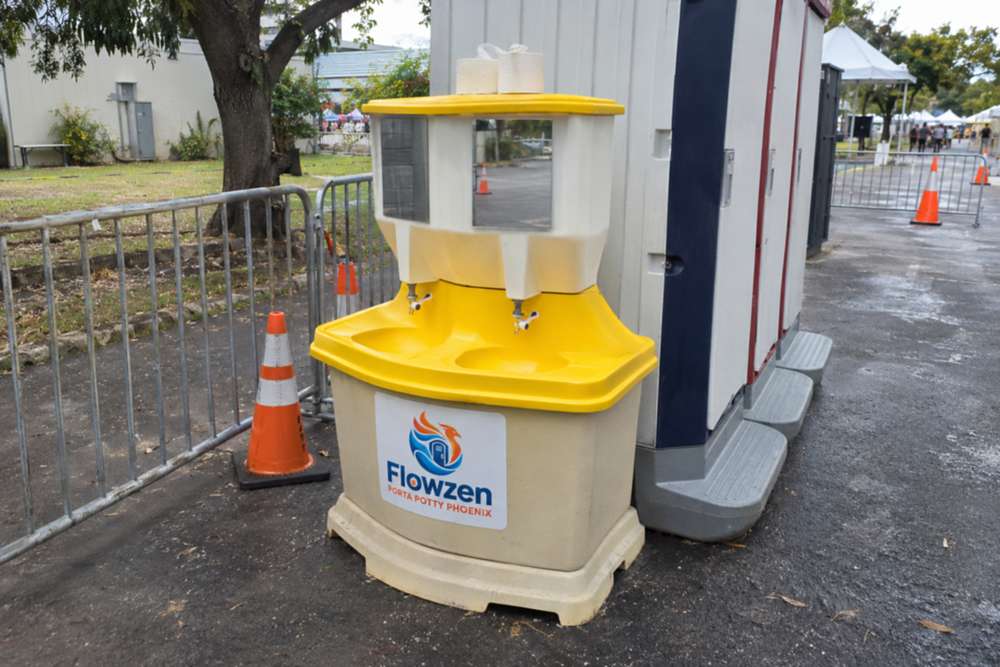
Portable handwashing stations are self-contained units built to deliver running water without a permanent hookup. While exact features vary by model, most share a common design. Here is what you can commonly expect, and what you should confirm when you call us.
- Freshwater tank and wastewater tank. One holds clean water for washing; the other collects the gray water that drains from the sink. The two are separate, so you are not reusing dirty water.
- Foot pump or hand pump. Many stations use a foot-operated pump to release water. This keeps hands from touching a faucet handle after washing, which is a sanitary design choice. Some models use a push-button or lever instead.
- Soap dispenser. Liquid soap is usually provided from a built-in dispenser or a bracket-mounted bottle. Confirm whether soap is included in the rental and how refills are handled for longer events.
- Paper towel holder or hand dryer. Most units have a dispenser for paper towels. A few use an air dryer. Paper towels are common for outdoor settings because they do not depend on power.
- Waste bin. A small trash receptacle for used paper towels is often attached to the unit or placed nearby.
- Multiple handwashing stations on one frame. Some models hold two or four sinks on a single freestanding unit, which helps with lines at larger events.
The materials are built for outdoor use. You will typically see polyethylene or similar plastics that handle sun exposure and frequent cleaning. The footprint is compact, often similar to a standard porta potty, so it fits in the same delivery footprint. The units are not connected to plumbing. They are filled with fresh water before delivery or on site, and the wastewater tank is pumped out when the unit is serviced.
Because models differ, ask us to walk you through what is included. We can explain the specific handwashing station models available in the Phoenix area, what comes standard, and how servicing works for the length of your event. That phone conversation is where you nail down the details.
Placement: Where a Handwashing Station Works Hardest
Where you put a handwashing station matters as much as having one. The goal is to make handwashing the easy choice, not something guests have to hunt for. Here are placement principles that work well for outdoor events.
Next to the Food Area
The highest priority is placing a station within a short walk of where food is served or eaten. If you have food trucks, a buffet tent, or a row of vendor booths, put a handwashing station at the entry to that zone or at both ends. Guests can wash hands before they pick up a plate, and staff can wash hands between tasks. This is also the placement that health inspectors will look for first.
Near the Portable Restrooms, but Not Too Close
A handwashing station should be visible from the portable toilet area, but give it a little breathing room. Placing it 10 to 20 feet away, on the path people naturally walk when they leave the restroom, creates a logical flow. Guests exit the porta potty, see the wash station, and use it without doubling back. If you tuck it right against the toilet units, lines can blend together and the area gets congested. A small separation keeps both zones functioning smoothly.
This pairs naturally with porta potty rentals of any type. With standard units, deluxe models or ADA accessible restrooms alike, a nearby handwashing station adds a layer of hygiene that a hand sanitizer pump alone cannot match. For events with food, this pairing is especially important. You can learn more about how restroom types fit different events in our article on standard vs deluxe porta potties.
At Entrances and Gathering Spots
For larger events, a handwashing station near the main entrance or exit gives guests a chance to clean up when they arrive or leave. If you have a kids' activity area, a petting zoo, or any hands-on exhibit, a station nearby is a smart move. Think about the places where hands get dirty, and put a sink there.
On Stable, Level Ground with Shade in Mind
In Phoenix, the sun is a real factor. A plastic handwashing station sitting in direct July sun can get hot to the touch, and the water inside can warm up more than you would like. Whenever possible, place the unit in shade, either from a tree, a canopy, or a pop-up tent. Shade helps keep the exterior cooler and makes the experience more pleasant for guests. The ground should be firm and level so the unit does not tip and the foot pump operates correctly. Avoid loose sand, deep gravel, or sloped surfaces. If shade is scarce, consider orienting the unit so the sink side faces away from the afternoon sun.
Managing Water in the Desert Heat
Phoenix sits in the Sonoran Desert, and summer temperatures routinely pass 100 F, often climbing above 110 F. That heat affects a portable handwashing station in a few practical ways. Water evaporates faster. The freshwater tank can get warm. And guests use more water because they want to rinse off sweat and dust, not just do a quick wash. Planning for these realities from the start keeps the station working through the whole event.
First, think about water capacity and refills. A handwashing station holds a finite amount of fresh water, typically measured in gallons. The number of handwashes that tank supports depends on the flow rate of the pump and how long people run the water. In hot weather, usage tends to be higher. Ask us about the tank capacity of the specific unit you are renting and whether mid-event refills are available for longer gatherings. For a full-day festival or a wedding that runs from afternoon into evening, a single fill may not be enough. You may need to schedule a service visit to refill the freshwater and pump out the gray water.
Second, water temperature. The freshwater tank is not refrigerated. In Phoenix summer heat, the water inside can get warm, especially if the unit sits in direct sun. Warm water is still effective for handwashing with soap, but it can be surprising to guests. Placing the station in shade helps. For events in the cooler months, roughly October through April, water temperature is rarely an issue, and the station is more comfortable to use overall. That is also the busy season for outdoor weddings and festivals in the Valley, so early planning is wise. Our article on choosing portable restrooms for a wedding covers more seasonal planning points.
Third, monsoon season. The official Arizona monsoon runs June 15 through September 30. Dust storms and sudden heavy rain can hit with little warning. A handwashing station is weather-resistant, but you still need to think about placement. Avoid low spots where water pools. Make sure the unit is stable enough that strong wind gusts will not knock it over. A full freshwater tank adds weight and stability, but a nearly empty tank near the end of an event is lighter. If a storm is forecast, check that the station is on firm ground and sheltered if possible.
Pairing Handwashing Stations with Different Types of Portable Restrooms
A handwashing station works alongside any portable restroom setup, but the way you pair them depends on the event. Here is a practical breakdown of how the pieces fit together.
| Restroom Type | Handwashing Consideration |
|---|---|
| Standard porta potties | Standard units typically do not include a sink. A separate handwashing station is the primary way to offer handwashing. Place one station per cluster of standard units. |
| Deluxe porta potties | Deluxe units commonly include a small hand sanitizer dispenser or a foot-pump sink inside the unit. A shared handwashing station outside still adds capacity and is useful near food areas. |
| ADA accessible portable restrooms | Accessible units are larger and designed for wheelchair entry. A nearby handwashing station should be placed on a level, hard surface with clear access. Confirm sink height and reach with us if a guest in a wheelchair will rely on the station. |
For events with food, a dedicated handwashing station near the food area is valuable regardless of what restroom type you choose. Even if every deluxe unit has its own sink, guests who are not using the restroom still need a place to wash hands before eating. That is the station's real strength: it serves the whole event, not just the restroom line.
If you are still working out how many restrooms and stations your event needs, our guide on how many porta potties you need walks through the factors that go into the count. The right number of handwashing stations usually follows from the number of guests, the presence of food, and the event layout. There is no one-size-fits-all ratio, but a phone conversation with us can get you to a solid plan.
Permits, HOAs, and Venue Rules: Things to Check Before Delivery
A handwashing station is a small structure, but it still counts as a placed unit at your event site. Before you finalize the rental, check for any rules that could affect placement.
If the event is on private property governed by an HOA, review any restrictions on temporary structures or equipment visible from the street. Some HOAs have rules about delivery vehicles, placement on driveways, or the number of units allowed. If you are using a public park, a street, or a sidewalk, you may need permission from the City of Phoenix. The process varies by location and event type, so contact the city directly to learn what is required for your situation. We deliver the unit; you are responsible for making sure it is allowed to be where you want it.
Venues often have their own requirements too. A wedding venue, a ranch, or a community center may specify where portable restrooms and handwashing stations can go, how they should be screened from view, and what surface protection is needed underneath. Ask the venue coordinator early so you can share those details when you call us to set up the rental.
Servicing and Maintenance During the Event
A handwashing station is not a set-it-and-forget-it item for a multi-day event or a long single-day gathering. The freshwater tank depletes. The wastewater tank fills. Soap and paper towels run out. Trash piles up. For a short event of a few hours, a well-prepped station can often go the distance without attention. For anything longer, servicing matters.
Common servicing includes pumping out the gray water, refilling the freshwater tank, restocking soap and paper towels, and wiping down the unit. How often this needs to happen depends on the number of guests, the heat, and the tank size. We can advise you on a servicing schedule that fits your event. Some event hosts assign a volunteer or staff member to do a visual check every hour or two and call for service if the station is running low. That is a practical backup plan.
For events that span multiple days, such as a weekend festival, nightly servicing is common. The unit gets reset so it is ready for the next morning's crowd. Confirm what servicing is included in your rental and what costs extra. Every company structures this differently, so ask directly when you call us.
Getting the Details Right for Your Phoenix Event
A portable handwashing station is a straightforward piece of equipment, but getting the details right makes a real difference on event day. The right unit, placed in the right spot, with enough water and supplies to last, keeps guests comfortable and helps food service run cleanly. In the Phoenix heat, those details matter even more.
When you are ready to work out the specifics, call Flowzen Porta Potty Phoenix. We can talk through the handwashing station models available, how they pair with the portable handwashing station rentals you are considering, and what servicing looks like for an event of your size and length. We know the conditions in the Valley and can help you think through placement, water capacity, and the right number of stations for your layout. For more event planning guidance, our article on portable restroom planning for large festivals covers coordination at scale.
Ready for a quote? Call us at (602) 848-6242 with your date, location and headcount. We are open daily, 7 AM to 9 PM.
Frequently asked questions
Do portable handwashing stations need a water hookup?
No. They carry their own freshwater and wastewater tanks and operate with a foot pump or hand pump. They do not need a hose connection or plumbing, which makes them suitable for parks, fields, and other outdoor locations.
How many handwashing stations should I have for an event with food?
There is no single rule, but a common approach is to place at least one station near the food service area and one near each cluster of portable toilets. Larger events with multiple food vendors or high guest counts often need more. The right number depends on your layout and expected attendance, so discuss it when you call us.
Can the water inside get too hot to use in Phoenix summer?
The water can get warm if the unit sits in direct sun during high heat, but it is still usable with soap. Placing the station in shade helps keep the water cooler and the exterior more comfortable to touch. Warm water does not reduce cleaning effectiveness when soap is used properly.
How often does a handwashing station need to be serviced during an event?
It depends on the number of guests, the tank size, and the weather. For a short event of a few hours, one fill may be enough. For a full-day or multi-day event, mid-event or nightly servicing to refill water, pump wastewater, and restock soap and paper towels is common. Confirm the servicing plan when you arrange the rental with us.