How Many Porta Potties Do You Need for an Event?
How many portable toilets for an event? Learn what changes the count: guest numbers, hours, food, alcohol, accessibility and handwashing. Plan smarter for Phoenix gatherings.
Porta potty rentals
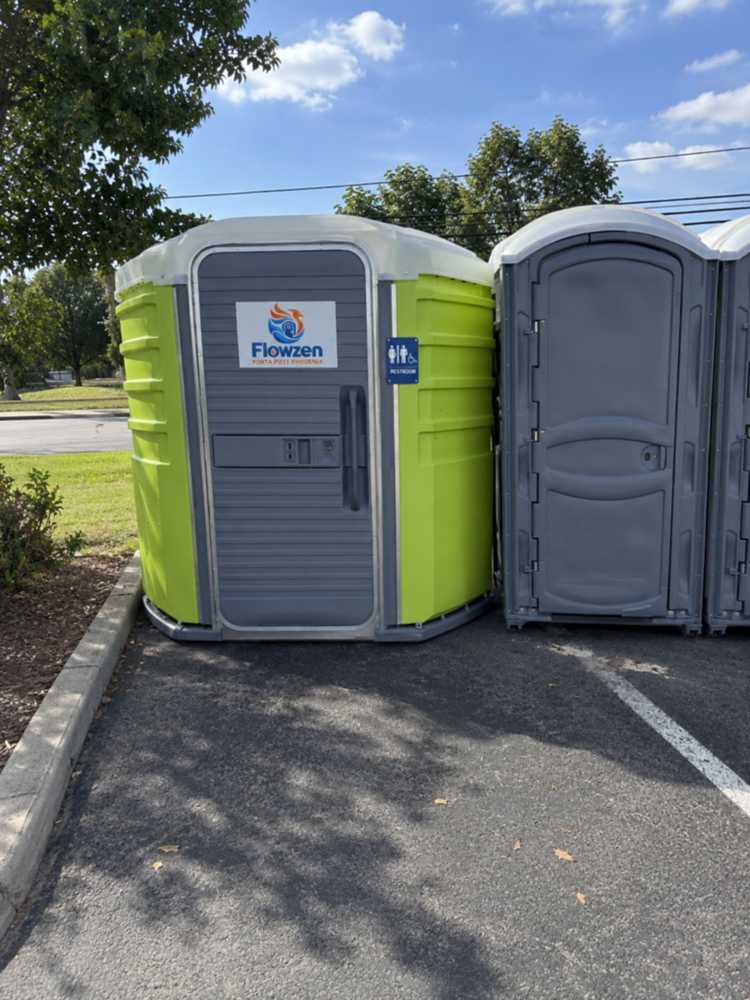
An accessible portable restroom makes an event or worksite usable for people with wheelchairs, walkers or limited mobility. Call Flowzen Porta Potty Phoenix to talk through the accessible units we have available for your dates.
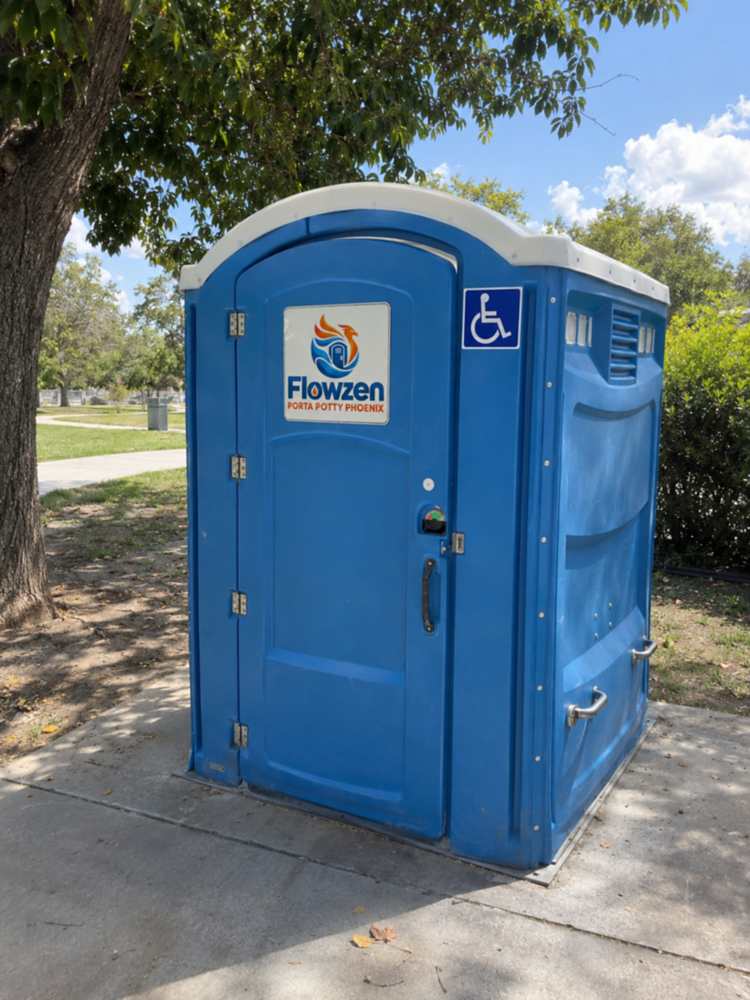
A standard porta potty works for a standing adult who can step up into a narrow enclosure. An accessible unit is built to serve someone in a wheelchair or a person who cannot manage stairs or a tight space. While the exact features vary by manufacturer, an ADA accessible portable restroom commonly includes these design elements:
These are general descriptions common across the portable sanitation industry. The specific model we have on the lot may include all or a subset of those features. Confirm the exact interior layout, door width and ramp style when you call.
Any gathering that invites the public or a large guest list needs at least one accessible unit. Weddings, festivals, outdoor concerts, company picnics, charity runs and block parties all draw people with different mobility needs. An event without an accessible restroom can leave a guest unable to use the facilities, which is a practical failure and often a legal problem the organizer must address. The number of accessible units depends on the total restroom count and the event layout. A small private party with one or two standard units might add a single accessible unit. A large festival spread across a park typically clusters accessible units with the standard banks. We help you think through that count by phone.
A commercial construction site with employees or subcontractors who use wheelchairs must provide a usable restroom. Even if no current crew member needs one, many general contractors include an accessible unit as part of their site setup to stay ready for inspectors, visitors or new hires. The ground conditions on a worksite change fast: graded dirt, mud, gravel. Accessible units still need a firm, level pad and a clear route, which we cover below.
An accessible porta potty only works if someone can actually reach it. That means placement matters more than it does for a standard unit.
The unit must sit on hard, flat ground or a temporary pad that will not sink. Asphalt, concrete, compacted crushed stone or a thick plywood platform all work. Soft dirt, sand, lawn that gets soggy, or a sloped driveway can make the unit tilt or prevent the door from closing properly. If your site has no natural hard spot, plan to build one. We can talk through what the delivery driver will need at the drop location.
There must be an unobstructed path from the parking area, the event entrance or the worksite trailer to the accessible unit. That path should be at least as wide as the unit door, free of steps, curbs, loose gravel, hoses, cables and guy wires. On a construction site the route often changes daily. Assign someone to check it each morning. For an event on grass, consider temporary trackway mats or a designated hard-path corridor. If the unit is placed on a public sidewalk or in a street right-of-way, you may need permission from the City of Phoenix. Check with the city and with your venue or HOA before you finalize locations.
Phoenix summer heat is intense. An accessible portable restroom, like any plastic enclosure, heats up fast in direct sun. When possible, place the unit where it will get afternoon shade from a building, a tree or a shade structure. Ventilation helps: make sure the roof vent is not blocked. For a long event or a multi-month worksite, think about adding a pop-up canopy over the unit to cut the direct sun load. The interior will still be warm, but shade reduces the worst of it. During monsoon season, from mid-June through late September, dust and sudden rain can make the approach route slippery. A stable, gritted path matters even more during those months.
There is no single formula printed on a website that fits every situation. Industry guidance generally recommends that when a bank of portable toilets is provided, a portion of them should be accessible. The exact ratio depends on the expected crowd size, the event duration, whether alcohol is served and the physical layout of the site. A small wedding with 60 guests might need one accessible unit. A construction site with 30 workers might also need one. A large outdoor festival with several hundred attendees spread across multiple restroom clusters will likely need an accessible unit at each cluster.
The best approach: describe your project to us on the phone. Share the type of event or site, the expected number of people, the hours of operation and the site map if you have one. Our team will help you arrive at a sensible count. Event organizers should also confirm their own obligations under the Americans with Disabilities Act and any state or local accessibility requirements. We can discuss what units are available; the organizer is responsible for the final count and placement plan.
Because inventory changes and unit specifications differ across manufacturers, every customer should confirm a few things directly with us before booking. Use this list as a guide for your phone call:
The more detail you provide about your site, the better we can match you with the right unit.
Hand hygiene is part of an accessible restroom setup. Some accessible portable restrooms include a small sink or hand sanitizer dispenser inside the unit. If the model you rent does not, or if you want soap-and-water handwashing directly outside, a separate portable handwashing station can be placed on a firm pad next to the accessible unit. That station should also be positioned at a height and with clear floor space that works for a wheelchair user. When you call to discuss accessible porta potties, ask whether the unit has onboard handwashing and whether an additional handwashing station makes sense for your layout.
For more detail on how accessible units fit into a larger restroom plan, read our article on planning accessible portable restrooms for events and worksites.
Ready for a quote? Call us at (602) 848-6242 with your date, location and headcount. We are open daily, 7 AM to 9 PM.
An ADA accessible porta potty is built so a person in a wheelchair can enter and use it. That typically means ground-level entry, a wider door, interior turning space, grab bars and a toilet at a transfer-friendly height. Confirm the exact features of the unit we carry when you call.
The number depends on total attendance, event layout and how many standard units you have. Industry practice suggests a portion of your total restroom count should be accessible. Call us with your event details to work out a sensible count.
It can, but the ground must be firm, level and stable. Soft dirt, sand or uneven grass can make the unit tilt and block the door. A temporary pad of plywood or compacted stone often solves the problem. Discuss your ground conditions when you call.
Some do and some do not. It depends on the manufacturer and model. We can tell you whether our current accessible inventory includes an interior sink or hand sanitizer, and whether a separate handwashing station would be useful for your site.
Planning guides
How many portable toilets for an event? Learn what changes the count: guest numbers, hours, food, alcohol, accessibility and handwashing. Plan smarter for Phoenix gatherings.
Learn what ADA accessible portable restrooms typically include, how to plan accessible routes and surfaces, and what to confirm before you rent in Phoenix.
A practical guide to planning portable restrooms for large festivals in Phoenix. Covers restroom banks, peak demand, ADA units, handwashing, heat, and multi-day logistics.
Get a quote
Call us with your date, headcount and location. Our team will talk through which portable restrooms fit and give you a quote. We are open daily from 7 AM to 9 PM.